image
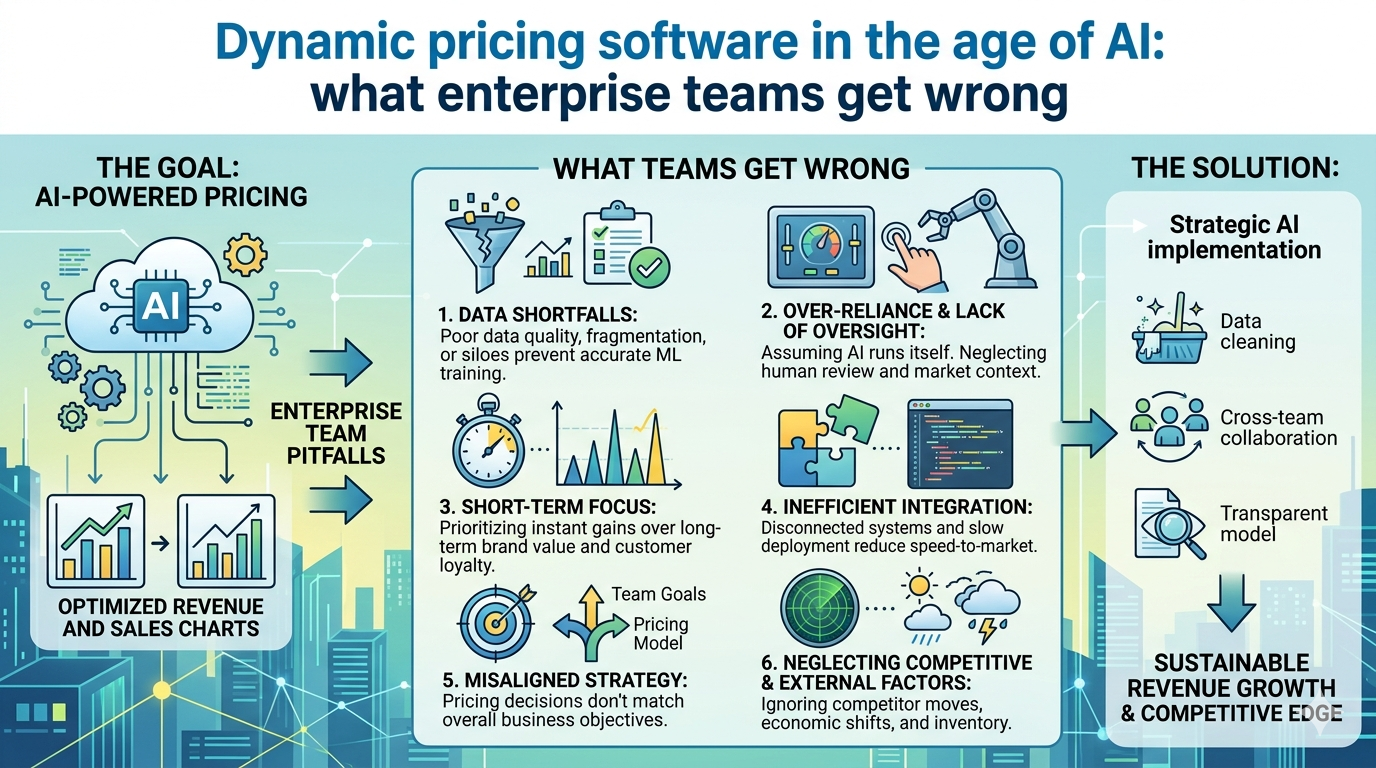
AI dominates technology conversations in 2025, and pricing sits right in the middle of it. Interest in dynamic pricing software and AI pricing tools continues to rise as margins tighten and competition becomes more transparent. Yet many enterprise teams still struggle to see meaningful impact from pricing automation.
The issue is rarely the software itself. It is how teams define, implement, and measure dynamic pricing.
AI pricing is more than automated rules
A common misconception is that dynamic pricing simply means setting up rules. For example, match a competitor’s price drop or increase prices when stock runs low. These rule based approaches automate tasks, but they do not truly optimize.
Real AI driven dynamic pricing software analyzes competitor pricing data, historical sales, elasticity, inventory levels, and margin targets. It identifies patterns and predicts outcomes before changes are made. Instead of reacting to what happened yesterday, it anticipates what is likely to happen next.
Enterprise teams often invest in advanced tools but configure them with basic logic. When results fall short, they blame the technology. In reality, they never moved beyond reactive pricing.
Competitor monitoring without strategy creates noise
Competitor monitoring is usually the starting point. Access to competitor pricing data feels powerful, especially in markets where customers compare prices instantly.
However, data alone does not equal strategy.
Blindly matching competitors can erode margins without improving conversion. Some competitors discount only selected products to attract traffic while protecting profitability elsewhere. Without context, price matching becomes a race to the bottom.
Dynamic pricing software should interpret competitor pricing data in line with your goals. Are you protecting margin, gaining market share, or clearing inventory. Market insight must be tied to intent. The goal is not to be the cheapest. The goal is to be deliberate.
Integration determines success
In enterprise environments, pricing touches CRM, ERP, CPQ, and ecommerce systems. If dynamic pricing software does not integrate properly, automation breaks down.
Sales teams override recommendations. Finance works with different numbers. Reporting becomes inconsistent. Trust erodes.
Pricing automation only works when product data, stock levels, sales performance, and competitor pricing data flow across systems. Integration is not a technical detail. It is a strategic foundation.
Teams that treat dynamic pricing as part of their broader digital transformation see stronger results. Pricing becomes embedded in daily workflows instead of sitting in a separate dashboard.
Automation needs governance
AI driven pricing can update thousands of products in minutes. That speed is powerful, but without guardrails it creates risk.
In B2B environments, pricing agreements vary by account. Brand positioning and contractual terms also matter. Full automation without boundaries can damage relationships.
The solution is controlled flexibility. Dynamic pricing software should operate within defined margin floors, category rules, and contractual limits. Within those boundaries, automation can move fast.
AI pricing enhances human decision making. It does not remove accountability.
Measure what actually matters
Many leaders expect immediate revenue spikes after implementing dynamic pricing software. When revenue stays flat in the short term, they question the investment.
Revenue alone is not the right metric.
Margin improvement, discount reduction, and price realization often tell a clearer story. Even small changes in average discount levels across a large catalog can create significant profit impact. Better price alignment with demand also improves inventory turnover and reduces excess stock.
ROI should be evaluated over time. AI models improve as they process more data and adapt to market behavior.
The real opportunity in 2025
Markets move quickly. Customers compare prices across channels within seconds. Static pricing cannot keep pace.
Dynamic pricing software transforms raw competitor pricing data and internal performance metrics into actionable market insight. When integrated properly and governed responsibly, it strengthens resilience and protects margin.
The key shift for enterprise teams is mindset. Pricing is not just a finance task or a reactive adjustment. It is a strategic lever tied to revenue, sales behavior, and long term competitiveness.
Platforms such as priceshape.com highlight how pricing intelligence connects data, automation, and decision making. The principle is simple. Better insight leads to better pricing decisions. Better decisions lead to stronger performance.
AI pricing is not a shortcut. It is a capability that rewards thoughtful implementation. Enterprise teams that move beyond basic rules, align systems, and measure the right outcomes unlock its full value.
About the Author